

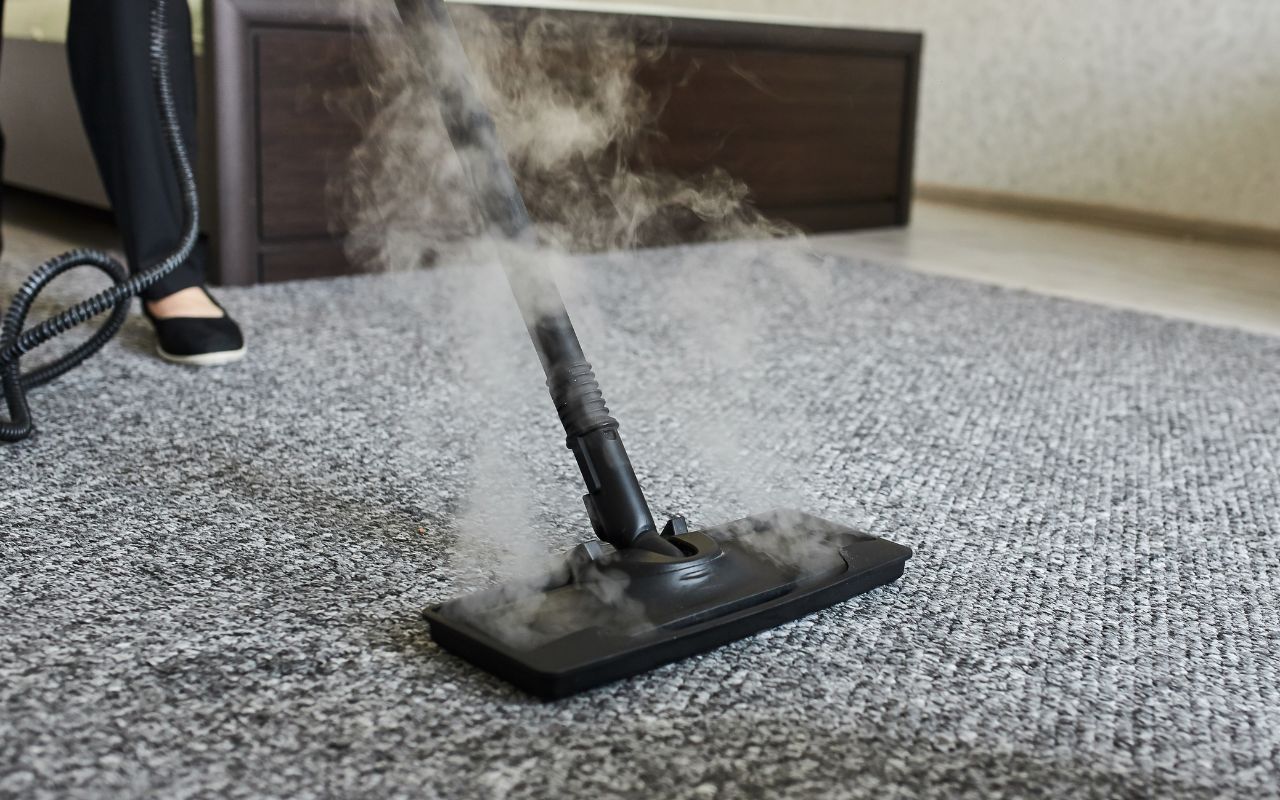
Choosing between steam cleaning vs carpet shampooing can be confusing because both methods are designed to remove dirt and improve the appearance of carpet. However, they use different processes and may produce different results depending on the carpet, soil level, stains, and available drying time.
Steam cleaning is the common name for hot water extraction. It applies heated water and a suitable cleaning solution before extracting loosened soil and moisture. Carpet shampooing works a foaming detergent into the carpet, often with mechanical agitation, before the soil and product are removed.
At GO 2 Steam, we look at the carpet fiber, condition, stains, household needs, and manufacturer guidance before recommending a cleaning method. This guide explains the differences so Ashburn homeowners can make an informed decision.
Steam cleaning usually refers to hot water extraction, even though the equipment does not clean the carpet with dry steam alone. The system applies heated water and cleaning solution to the fibers, loosens embedded soil, and extracts the suspended dirt and moisture.
A professional process commonly begins with vacuuming and inspection. Stains and high-traffic areas may receive targeted pretreatment. The technician then makes controlled extraction passes and may groom the carpet to support an even appearance and faster drying.
Extraction is an important part of the method. It removes loosened soil and much of the water used during cleaning. The final result depends on the equipment, technician, carpet condition, cleaning products, and number of extraction passes.
Traditional carpet shampooing applies a foaming detergent and works it into the pile with a brush or rotary machine. The agitation helps loosen oily soil, visible grime, and matted areas. The shampoo and suspended dirt then need to be removed according to the system being used.
Some older shampoo methods allowed foam to dry before vacuuming the remaining crystals. Modern services may combine agitation with extraction. This means two companies can use the term carpet shampooing while offering different processes.
Ashburn homeowners should ask exactly how the carpet will be rinsed or extracted. A shampooing method that leaves too much detergent behind can make fibers feel stiff and may attract soil more quickly.
ComparisonSteam cleaningCarpet shampooingMain processHeated water and extractionDetergent foam and agitationCleaning depthDesigned for deeper extractionStrong surface and pile agitationProduct residueUsually lower when rinsed and extracted properlyMay be higher if detergent is not fully removedDrying timeOften several hoursCan take longer depending on moisture and product useBest suited forGeneral deep cleaning and embedded soilHeavily soiled or matted carpet when appropriateMain concernOverwetting if used incorrectlyResidue or stiffness if not thoroughly removed
This comparison describes the methods in general. Equipment and procedures vary, so the quality of the technician and the suitability of the process remain important.
Hot water extraction is often chosen when soil has moved below the visible surface. Heated water and professional extraction can lift and remove particles that ordinary vacuuming leaves in the carpet pile.
Shampooing relies more heavily on detergent and agitation. It can be useful for carpet with greasy soil, visible traffic lanes, or matted fibers when the carpet can tolerate mechanical action. However, agitation alone does not remove the loosened material. Effective rinsing or extraction is still necessary.
For most routine residential deep cleaning, we often favor a well-controlled extraction process. A heavily soiled carpet may still need pretreatment and agitation before extraction. The best service may therefore use elements of both approaches instead of treating the choice as a strict either-or decision.
Neither method automatically removes every stain. Successful stain treatment depends on the substance, carpet fiber, age of the spot, previous cleaning attempts, and whether the spill changed the carpet dye.
Hot water extraction can remove loosened residues after the correct spot treatment has been applied. Shampooing may help work a product into a heavily soiled surface, but aggressive brushing can damage delicate fibers or spread a stain when the process is unsuitable.
Coffee, food, mud, grease, pet urine, ink, and dye-based stains do not respond to one universal cleaner. A technician should identify the likely stain and test the carpet when necessary. Permanent color loss cannot be washed away by either method.
Pet urine requires more than general whole-room cleaning when it has soaked below the surface. A visible spot may be limited to the fibers, but repeated accidents can reach the backing, padding, or subfloor.
Steam cleaning combined with a suitable targeted treatment can remove urine residue from reachable carpet fibers. Extraction helps pull out the treatment, loosened contamination, and moisture. Shampoo alone may improve the surface without reaching the full odor source.
If contamination is in the padding, neither routine steam cleaning nor shampooing can guarantee full removal. The carpet may need to be lifted so the affected materials can be inspected. Read our guide on whether carpet cleaning can remove pet urine and odors for a more detailed explanation.
Drying time depends on the carpet thickness, indoor humidity, airflow, cleaning method, equipment, and amount of moisture left behind. Steam-cleaned carpet often needs several hours to dry. Shampooed carpet may take as long or longer when more product and water are used.
Professional extraction, dry passes, air movement, and climate control can shorten the process. Homeowners can support drying by running ceiling fans, using air conditioning or a dehumidifier, and following the technician’s aftercare instructions.
The U.S. Environmental Protection Agency advises preventing excess moisture and ensuring cleaned carpet dries quickly. Carpet should never be left unnecessarily wet, regardless of the cleaning method.
Ashburn homes experience a mix of everyday foot traffic, seasonal pollen, pet hair, tracked-in soil, and moisture from changing weather. These conditions do not make one method mandatory, but they make regular vacuuming and periodic professional cleaning important.
For most homes needing general deep cleaning, hot water extraction is often the practical choice. It can address embedded soil while allowing the technician to extract the cleaning solution and moisture. Pretreatment or controlled agitation may be added for busy hallways, stairs, family rooms, or greasy traffic lanes.
Carpet shampooing may be considered for a heavily soiled surface that needs more agitation. Before choosing it, ask how the detergent will be removed and whether the process is recommended for your carpet.
Start with the carpet rather than the name of the method. A professional should inspect the fiber, construction, soil level, stains, odors, traffic patterns, and any previous damage.
Ask the cleaning company these questions before booking.
Clear answers are more useful than a claim that one method is always superior. The technician should be able to explain the full process and any limitations.
The terms are commonly used interchangeably. Professional steam cleaning usually applies heated water and cleaning solution before extracting the loosened soil and moisture. It does not rely on dry steam alone.
It can leave residue when too much detergent is used or the carpet is not thoroughly rinsed and extracted. A professional process should control product use and remove as much residue as possible.
Drying time varies by equipment, technique, carpet type, humidity, and airflow. Hot water extraction often dries within several hours when moisture is removed effectively. Shampooing may take longer when it uses more product or water.
No single method suits every carpet. Wool, natural fibers, delicate dyes, damaged carpet, and certain constructions may need a modified process. Inspection and manufacturer guidance should shape the recommendation.
When comparing steam cleaning vs carpet shampooing, steam cleaning is often the stronger option for routine deep cleaning because it combines heated water with professional extraction. It can remove embedded soil while limiting detergent residue when the process is performed correctly.
Carpet shampooing can still have a place when heavily soiled or matted carpet needs controlled agitation. Its effectiveness depends on using a suitable product and removing the detergent thoroughly. The carpet type and condition should always guide the decision.
GO 2 Steam provides professional carpet cleaning for Ashburn homes and surrounding DMV communities. Contact our team for an honest assessment and a cleaning recommendation based on your carpet, stains, and household needs.
.png)